| Phase | What to settle | Planning use |
|---|---|---|
| Choosing a truck | Vendors that list corporate or company-celebration service and accept event reservations | Shortlist trucks that already book workplace events before asking for quotes. |
| Pricing structure | Who pays: the company up front, or employees ordering at the window; any minimum spend by day of the week | Decide the budget model before the vendor builds a quote. |
| Site approval | Room for the truck, staff queue, service area and equipment; parking, access and event requirements | Walk the lot and ask property management and the vendor early. |
| Serving schedule | Service window agreed with the vendor in advance, matched to the staff break | Set the timing so a short break does not turn into a long line. |
| Dietary needs | Requirements shared with the vendor before the event | Collect staff needs ahead of the booking, not on the day. |
Planning points in this table draw on District Bites’ guidance on truck catering for employee appreciation events and the event terms published by Lil Dipper.
A dessert food truck corporate event Minneapolis booking works best when the guest count, menu, location and service schedule are confirmed with the vendor first, and the lot has room for the truck and its service area.
For vendors across the metro, start with the main guide to dessert food truck minneapolis options, then use the workplace steps below to turn a shortlist into a booking.
Phase one: choosing a truck for corporate catering
Start with trucks that already treat workplaces as customers. Lil Dipper, a soft-serve operator, says it serves both weddings and company celebrations. It also states that its cart can be used indoors or outdoors, which matters when an office lot is tight.
Directory listings help build the shortlist. Roaming Hunger’s Minnesota dessert category shows 81 dessert trucks, and the Minneapolis directory on Food Trucks In lists trucks, trailers, carts and stands based in the city. That directory notes that BLUE MOO is accepting event reservations through its contact page. Treat listings as a starting list only, because a listing does not confirm that a vendor will serve a particular office or lot.
When a truck suits the occasion
District Bites describes food trucks as a stronger option when the goal is a casual, social and interactive event. That makes a dessert truck a natural fit for an employee appreciation dessert truck visit, a team celebration or an afternoon break. A formal seated dinner with speeches is a weaker match, because the truck format depends on people drifting up to a window.
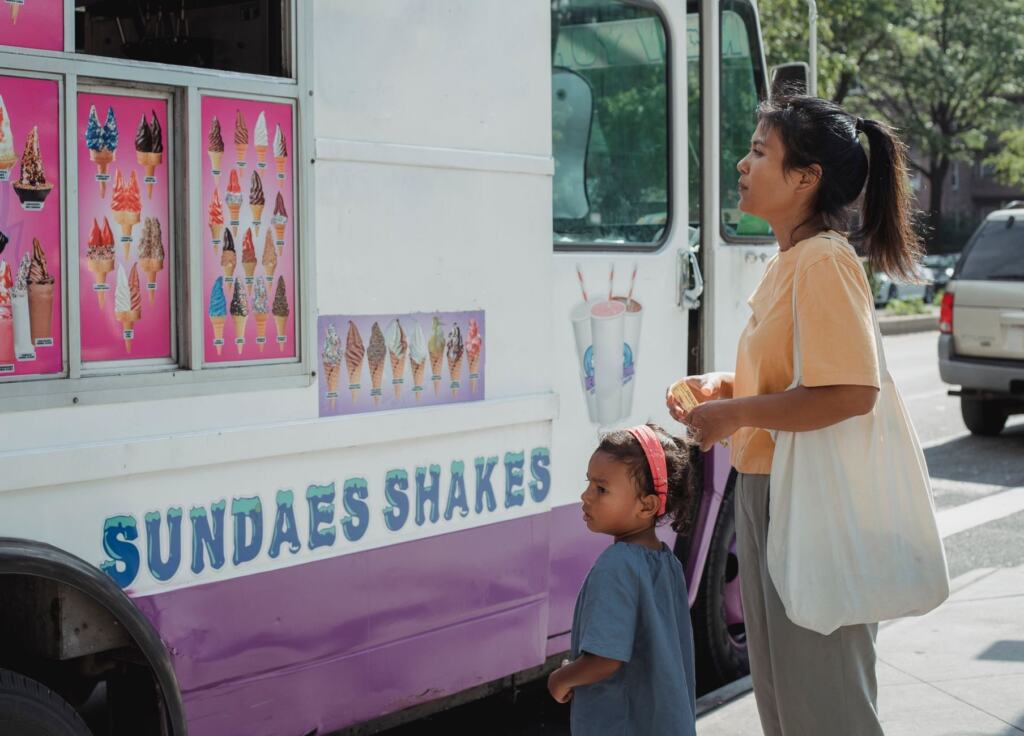
Desserts also have a natural slot: District Bites notes they can be served after lunch or dinner as a finishing touch. If the office already has a catered lunch, a dessert truck can follow it rather than compete with it.
Phase two: prepaid or pay-as-you-go
The payment model is the main workplace decision that weddings and family parties rarely face. Under a prepaid or company-funded model, the employer settles the bill and staff simply choose. Under pay-as-you-go, employees order and pay for themselves at the window. District Bites describes employees ordering directly from the truck and choosing options that match their preferences, which fits either model.
- Company-funded: suits appreciation events, because nobody reaches for a wallet and the gesture stays the point. Agree the menu and the headcount the budget covers so the vendor can plan the quantity.
- Pay-as-you-go: suits a casual treat day when the company wants to bring the truck on site without carrying the full cost. Check that the vendor will agree to this and ask what its terms are for a private booking.
- Minimum spend: some trucks set one. Lil Dipper, for example, says it charges a minimum of $500-$1,000 for public events, depending on the day of the week. Terms for a private office booking may differ, so request them in writing.
A minimum spend changes the sums for a small team. A small group on a pay-as-you-go day may not reach it, and the company would then cover the difference. Larger staff gatherings are less likely to run into that problem.
Phase three: parking-lot vending and building approvals
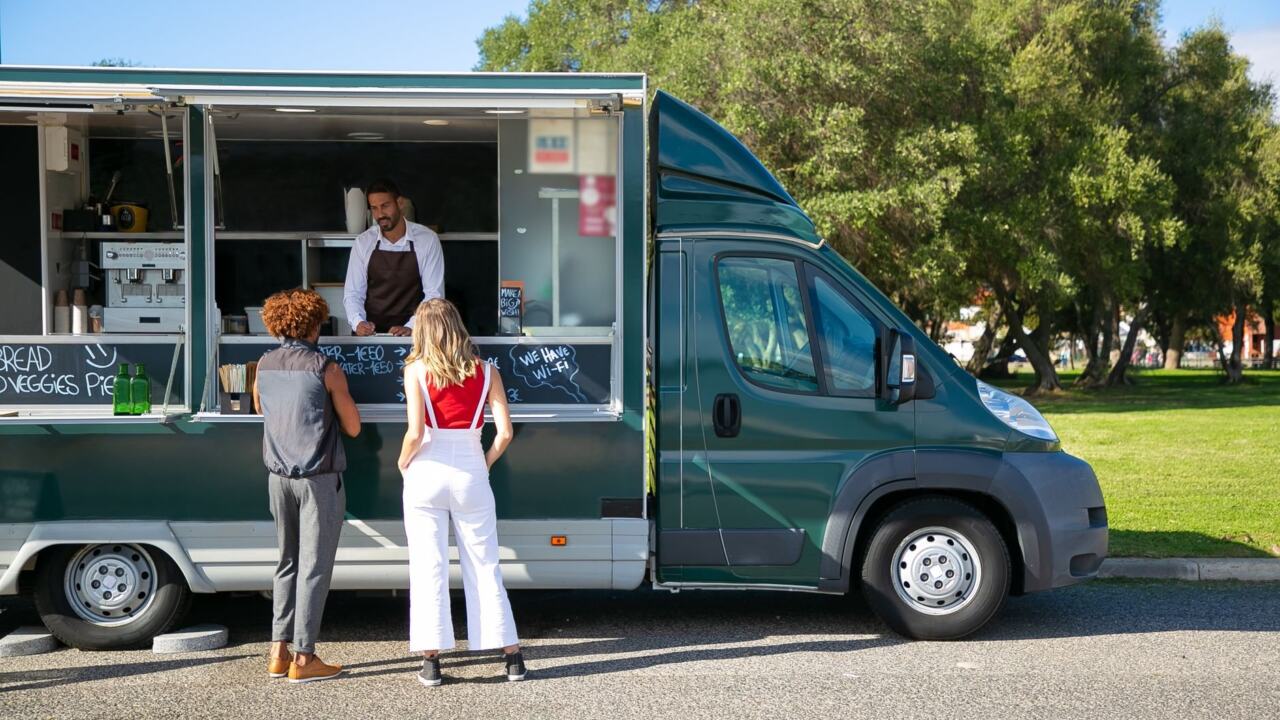
An office parking lot has to fit more than the vehicle. District Bites advises confirming that the location has enough space for the truck, employees, service area and equipment. In practice that means a flat spot clear of delivery access, with room beside the window for a queue.
Questions for property management and the vendor
No single public rulebook covers every office lot, so treat approvals as a short conversation with the people who control the property. District Bites lists parking and access and event requirements among the things to ask a vendor. Add these to the list for the building side:
- Ask property management whether a vendor truck may park in the lot at all, and on which side of the building.
- Ask what access the truck needs for arrival and departure, and whether any lanes must stay open.
- Ask the vendor what its own event requirements are, and pass them to the building contact.
- Ask the vendor whether city permit paperwork applies to the booking and who handles it, and get the answer in writing.
- If the lot cannot take a truck, ask about an indoor option, since some carts can run inside.
Phase four: event-day timing and serving throughput
How many employees a truck can serve in an hour depends on the menu, the number of service windows and the staff, so there is no honest universal figure. The reliable step is to ask the vendor for its own service rate for the menu you choose, then compare it with the headcount. District Bites notes that the number of employees attending can affect how many trucks are needed.
Time matters as much as space. District Bites points out that employee appreciation events often have a limited lunch or break period, and it recommends agreeing the serving schedule with the vendor in advance to avoid long waits. For a large staff, that points to two practical moves.
- Stagger the visit: spread teams across the service window instead of releasing everyone at once, so the queue stays short.
- Keep the menu tight: a short dessert list serves faster than a long one. Ask the vendor which items are quickest to hand over.
Once the guest count, menu, location and service schedule are confirmed, the truck provider can plan the service. Raise dietary requirements at the same time, since District Bites advises discussing them with the vendor before the day.
Company picnics and larger gatherings
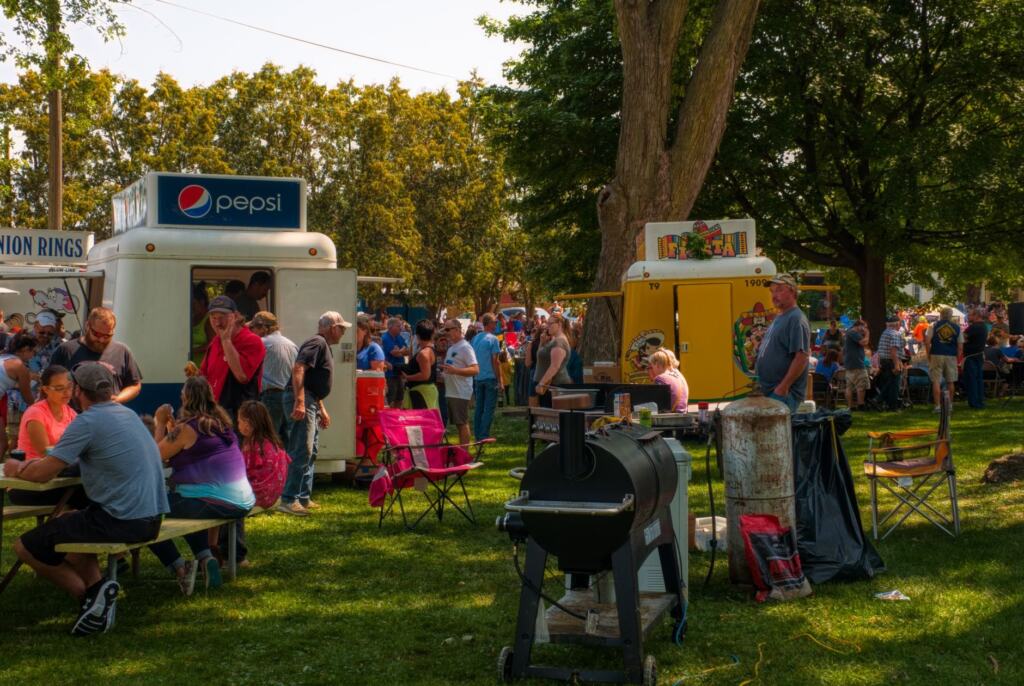
A company picnic food truck changes the layout question. Outdoor space is usually easier on a lawn or park-style site than in a lot, but seating, shade and queue room still need planning. The same schedule logic applies: agree when service starts and ends, and decide whether the truck serves dessert after a main meal.
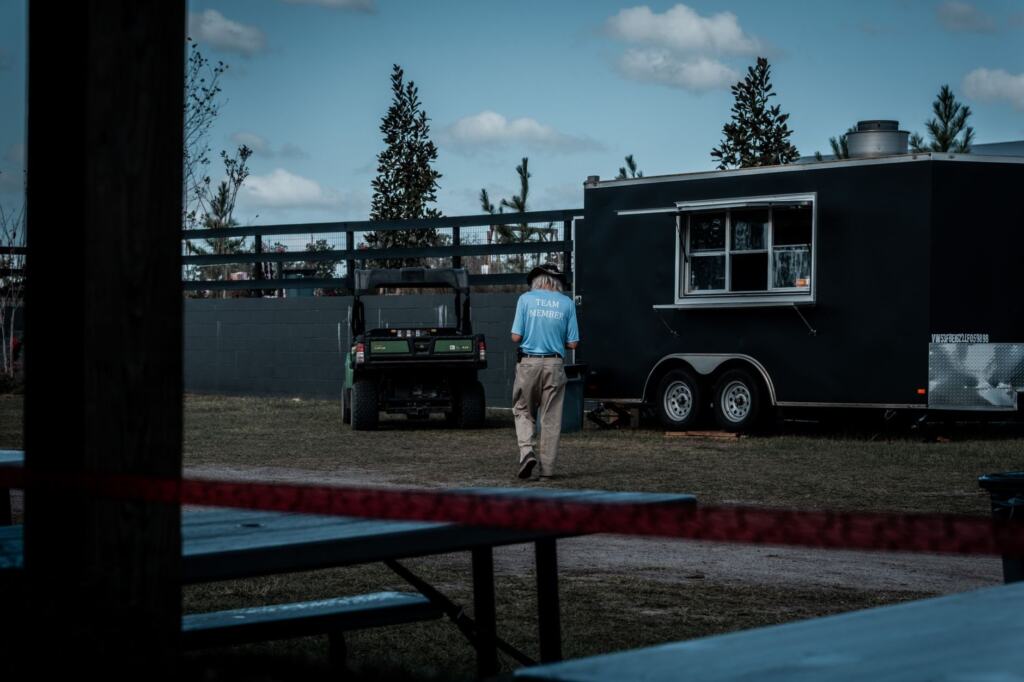
Picnics held away from the office may bring other requirements from the site owner, so ask the vendor and the venue the same access questions as for a lot. Events that are not workplace-focused follow different rules, which the guides to a dessert food truck for wedding Minneapolis booking and a dessert food truck for birthday party Minneapolis celebration cover.
Troubleshooting common problems
- The lot is too tight: ask the vendor whether an indoor-capable cart is available, or move the event to a different part of the property.
- The queue is growing: work with the vendor on the serving schedule beforehand, and stagger teams rather than adding more dessert choices.
- The quote includes a minimum: check the day of the week, since a vendor such as Lil Dipper ties its public-event minimum to the day. A different day may change the number.
- Staff have dietary needs: send the requirements to the vendor before the event so the menu can reflect them.
- The vendor is booked: contact others from the directory listings, and use the reservation route a vendor publishes, such as BLUE MOO’s contact page.
Frequently asked questions
How many trucks does a larger staff need?
The number of employees attending affects how many trucks are needed. Give the vendor the headcount and service window, and let it advise on one truck or more.
Can a dessert truck serve indoors?
Some can. Lil Dipper says its cart can be used indoors or outdoors, so ask each vendor whether an indoor setup is offered.
Is truck catering becoming more common?
Industry research from USD Analytics projects a 7.1% compound annual growth rate for the global food truck market from 2025 to 2034. The same report describes trucks serving customers in urban centers, office parks, festivals and special events.